Tag Archives: mindfulness

Energize Your Mornings: 6 Simple Rituals to Kickstart a Positive Day

Sunset over ocean with waves gently lapping shore and colorful sky

How you begin your morning often determines how the rest of your day unfolds.

It’s easy to wake up already thinking about everything that needs to be done—appointments, work, family responsibilities, errands, workouts, and the never-ending to-do list. Before we know it, we’re reacting to the day instead of leading it.

The good news? You don’t need an elaborate morning routine that takes hours. Just a few intentional habits can increase your energy, improve your mood, sharpen your focus, and help you approach the day with confidence.

Here are six simple morning rituals that can transform your day from the moment your feet hit the floor.

1. Get Up When the Alarm Goes Off

Alarm clock and cellphone on bedside table

Skip the snooze button.

Those extra 5–10 minutes may feel satisfying, but repeatedly drifting in and out of sleep can actually leave you feeling more sluggish. Sleep experts even have a name for it: sleep inertia—that groggy feeling that can linger after interrupted sleep.

Instead, when the alarm sounds:

  • Count down: 5…4…3…2…1…
  • Sit up immediately.
  • Put both feet on the floor.
  • Tell yourself, “Today is a gift.”

Starting your day with a small win builds momentum for every decision that follows.

2. Make Your Bed Immediately

Bedroom with wooden headboard, white and blue pillows, bedside table with lamp and plant, blue dresser with decor

It may seem like a tiny task, but making your bed is the first accomplishment of the day.

It signals to your brain:  “I’m awake. I’m organized. I’m ready.”

A made bed also creates a calmer, more peaceful environment you’ll appreciate when it’s time to unwind in the evening.  Small habits create big discipline.

3. Begin with Prayer and Scripture

Hands clasped in prayer next to an open Bible, a handwritten devotion journal, and a cup of tea

Before checking emails, scrolling social media, or turning on the news, spend 8–10 minutes connecting with God.

Prayer centers your heart.

Scripture renews your mind.

Instead of allowing the world to dictate your thoughts, you invite God’s peace, wisdom, and direction into your day.

Consider beginning with:

  • A short prayer of gratitude
  • Reading a Psalm or Proverb
  • Writing one verse that speaks to you
  • Praying over your family and upcoming day

“Commit your work to the Lord, and your plans will be established.” — Proverbs 16:3

A peaceful mind is one of the greatest sources of lasting energy.

4. Hydrate and Fuel Your Body
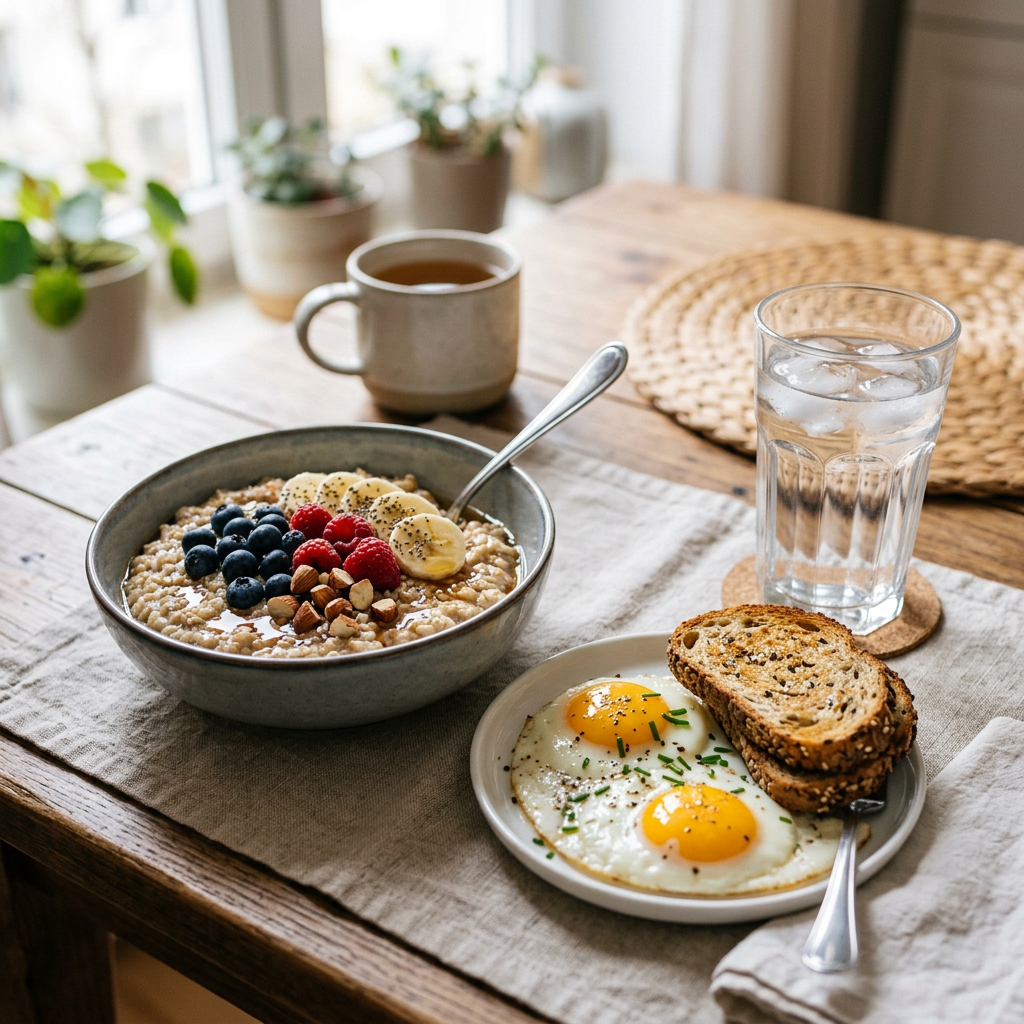
Bowl of oatmeal with fruit and nuts, plate with two fried eggs and toast, cup of tea, and glass of water with ice

After several hours of sleep, your body wakes up mildly dehydrated.

Before reaching for another cup of coffee, drink at least 10–16 ounces of water.

Hydration helps:

  • Wake up your metabolism
  • Improve concentration
  • Support digestion
  • Reduce fatigue
  • Increase energy

Then nourish your body with a balanced breakfast that includes:

  • Lean protein
  • Healthy carbohydrates
  • Fiber
  • Healthy fats

Examples include:

  • Greek yogurt with berries and granola
  • Eggs with whole-grain toast and fruit
  • Protein oatmeal
  • A protein smoothie with spinach and berries

Food isn’t just fuel—it’s information for your body.

5. Move Your Body for 5–10 Minutes

Woman stretching arms upward on a forest trail during sunrise

You don’t have to complete a full workout before breakfast.

Simply get your body moving, and you only need a few minutes.

Movement increases circulation, lubricates your joints, improves mobility, boosts your mood, and tells your brain it’s time to wake up.

Try:

  • Gentle stretching
  • Yoga
  • A short walk outside
  • Bodyweight exercises
  • Deep breathing with mobility work

Movement creates energy.  Often, the hardest part is simply getting started.

6. Set One Intention for Your Day

Desk with notebook, coffee cup, laptop, glasses, books, and glass of water by window

Rather than looking at a list of twenty things that need to be done, ask yourself one simple question:

“What’s the most important thing I can accomplish today?”

Choose one priority.  Then choose one word that describes how you want to show up.

Examples:

  • Joy
  • Grace
  • Strength
  • Patience
  • Courage
  • Peace

When you begin your day with intention, you’re less likely to become overwhelmed by distractions.

Success isn’t about doing everything.  It’s about doing the right things well.

Start Small—Stay Consistent

You don’t have to master all six habits tomorrow morning.  Start with one.

Then add another the following week.

Small, consistent actions performed every day produce incredible results over time.

Remember…  Every sunrise is a fresh opportunity.

A new chance to grow stronger.

To serve others.

To take care of your health.

To honor God.

And to become the healthiest version of yourself.

Here’s to energized mornings and purposeful days!

Coach Lisa 💙

“This is the day the Lord has made; let us rejoice and be glad in it.” — Psalm 118:24
Yoga for Every Body: Discovering the Benefits Beyond Flexibility 🧘‍♀️✨

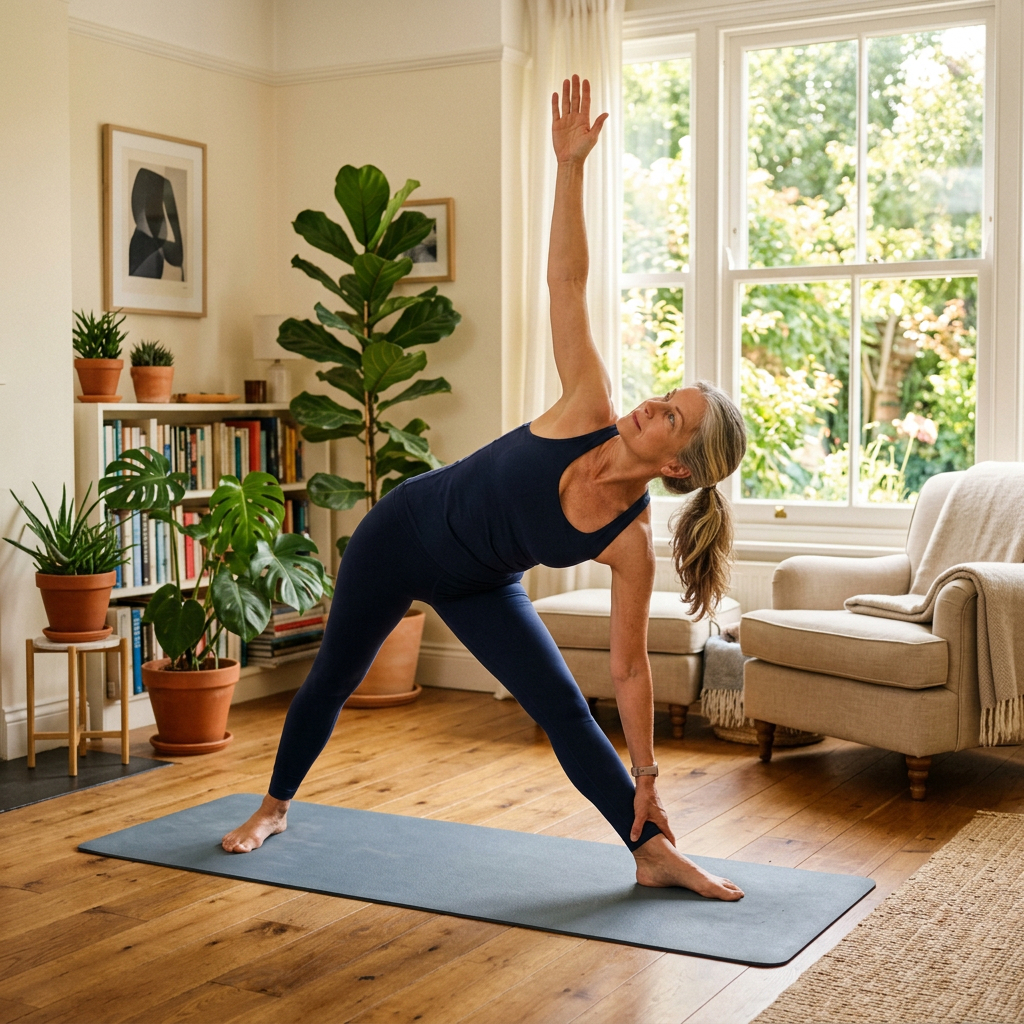
Woman doing a yoga triangle pose on a mat in a bright living room

When many people think of yoga, they picture someone effortlessly touching their toes or twisting into complicated poses.

But here’s the truth:

You do not have to be flexible to start yoga.

In fact, one of the best reasons to practice yoga is to become more flexible, mobile, and comfortable in your body over time.

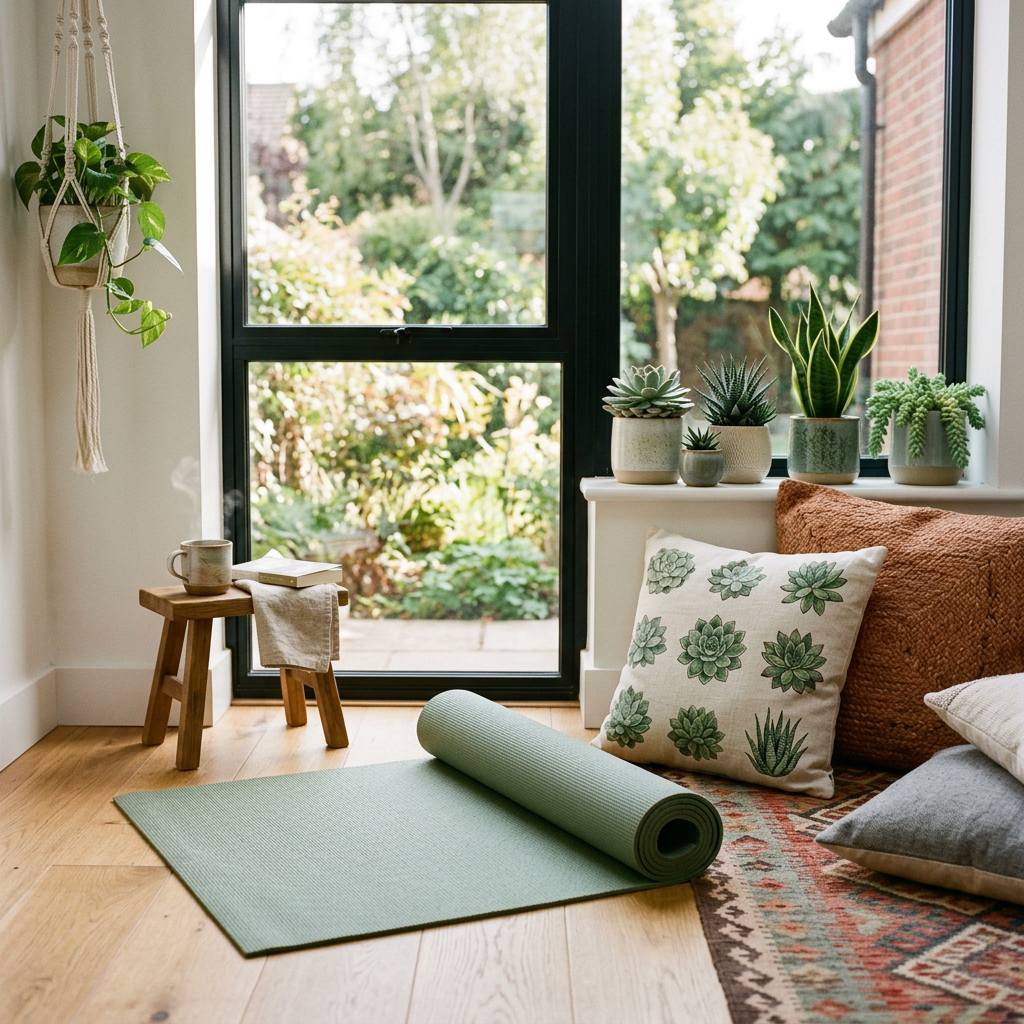
Partially rolled yoga mat by big window, succulents cushions

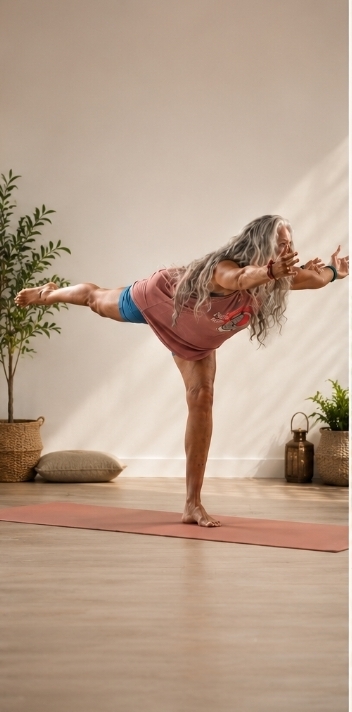
Yoga is for every body—every age, every size, every fitness level, and every season of life.

Yoga isn’t about perfection. It’s not about comparing yourself to the person on the mat beside you. It’s about honoring where you are today and taking one small step toward feeling stronger, healthier, and more connected tomorrow.

At its heart, yoga helps us move better, feel better, and live better.

While improved flexibility is certainly a benefit, yoga offers so much more:

Yoga can help:

✔ Improve balance and stability to help prevent falls

✔ Increase mobility and joint health

✔ Reduce stress, anxiety, and everyday tension

✔ Improve posture and breathing

✔ Build strength and muscular endurance

✔ Support better sleep and recovery

✔ Increase body awareness and confidence

✔ Calm the nervous system and quiet the mind

✔ Enhance overall well-being and quality of life

For adults over 50, yoga can be one of the most powerful tools for maintaining independence, mobility, and vitality as we age. It helps us continue doing the things we love—whether that’s playing with grandchildren, traveling, gardening, exercising, or simply moving through daily life with greater ease.

And here’s the beautiful part:

Yoga meets you exactly where you are.

Modifications are always available. Chairs can be used. Rest breaks are welcomed. Every pose can be adapted to fit your body’s needs.

You do not have to be “good at yoga” to benefit from yoga.

You simply have to begin.

One breath.
One movement.
One class at a time.

Your journey toward greater strength, balance, flexibility, and peace starts with a single step onto the mat. 💛

Strong. Fit. Functional for Life.

Coach Lisa
FTM Wellness

Self Care Is NOT Selfish!

Managing a family, home, and job often feels like it takes more than the 24 hours we’re given each day. Finding “extra” time for exercise and healthy meal prep can be tough—but remember this: taking care of your health is the best investment you can make in your family.

We’ve already talked about the pillars of wellness—clean nutrition, regular movement, and quality sleep. But there’s one more that’s often overlooked: self care.

Too many of us treat self care like a luxury, or worse, like something selfish. In reality, it’s maintenance for your emotional, mental, and physical health. You wouldn’t expect your car to run smoothly without oil changes, tire rotations, and tune-ups. The same goes for you—without intentional care, you’ll eventually feel drained, overwhelmed, or even “stranded.”

Self care doesn’t have to be big or expensive. It could be as simple as:

  • A quiet coffee date with a friend
  • A soak in the tub
  • A massage or pedicure
  • A favorite hobby
  • Or even planning a getaway to reset and recharge

Remember—none of us can pour from an empty cup. Taking time for yourself gives you the energy, patience, and strength to keep giving your best to the people and things you love most.  For me, just meeting a friend for coffee for 30 minutes, gifting myself a pedicure, or even a 20 minute soak in the tub can be a powerful “re-charge” for my brain and my heart!

Self-care is important because it’s the foundation of your overall health, happiness, and ability to show up for others. Too often, we think of it as “extra” or “selfish,” but in reality, it’s essential. Here are the main reasons why:

1. Protects Your Physical Health

  • Exercise, sleep, good nutrition, and rest are all forms of self-care.
  • Without them, energy levels drop, immunity weakens, and risk of illness increases.

2. Supports Mental & Emotional Well-being

  • Self-care reduces stress, anxiety, and burnout.
  • It gives you space to reset, recharge, and gain clarity.

3. Improves Relationships

  • When you care for yourself, you’re less drained and more present for loved ones.
  • You set healthy boundaries and avoid resentment.

4. Boosts Productivity & Focus

  • Rested, nourished people think more clearly and work more efficiently.
  • Breaks and recovery actually make you more effective.

5. Builds Confidence & Self-Worth

  • Taking time for yourself affirms that you matter.
  • Small acts of self-care reinforce self-respect and self-love.

6. Longevity & Independence

  • Consistent self-care habits (movement, healthy eating, stress management) allow you to maintain strength, mobility, and independence as you age.

👉 In short: self-care is not indulgence—it’s maintenance. Just like charging your phone or filling up your car’s gas tank, you can’t run on empty.

🌿 Practical Self-Care Strategies

🛌 1. Prioritize Rest & Recovery

  • Sleep: Aim for 7–9 hours. Create a wind-down routine (dim lights, stretch, journal, no screens 30 minutes before bed).
  • Active Rest: Yoga, walking, or gentle stretching instead of constant high-intensity workouts.
  • Mind Breaks: Take 5 minutes every few hours to step away, breathe deeply, or sip water.

🍎 2. Fuel Your Body Well

  • Hydration: Keep a water bottle nearby; add lemon or fruit if plain water bores you.
  • Balanced Meals: Pair protein + fiber + healthy fat to stay energized and avoid crashes.
  • Meal Prep: Even prepping one thing (like chopping veggies or cooking protein) makes healthy choices easier during the week.

🏋️ 3. Move Daily (Beyond Workouts)

  • Structured workouts are fantastic, but also:
    • Take the stairs.
    • Do a set of squats, push-ups, or stretches while dinner cooks.
    • Walk during phone calls or meetings.
  • Think functional fitness—movements that help you carry groceries, play with kids, and age strong.

🧘 4. Mental & Emotional Recharge

  • Journaling: Brain dump worries, or write 3 things you’re grateful for.
  • Mindfulness: 5–10 minutes of meditation, prayer, or deep breathing.
  • Joy Breaks: Read a chapter of a book, dance to music, or enjoy a hobby guilt-free.

💕 5. Set Boundaries & Say No

  • Protect your time and energy. Overcommitting leads to burnout.
  • Simple script: “Thank you for asking, but I can’t commit right now.”

👩‍👩‍👧 6. Social Self-Care

  • Schedule time with friends/family who lift you up.
  • Limit time with people or online spaces that drain you.

🧩 7. Personal Growth

  • Read, listen to podcasts, or take a course that inspires you.
  • Learning keeps your brain sharp and gives you something positive to focus on.

🗓️ 8. Build Self-Care into Routine

  • Attach it to habits you already do. Example:
    • While brushing teeth → practice deep breathing.
    • During coffee time → journal one sentence.
    • At lunch → walk for 10 minutes.

✅ The key is consistency, not perfection. Self-care isn’t about spa days (though those are lovely); it’s about creating daily rhythms that recharge your body, mind, and spirit.  This week, pick ONE small act of self-care and schedule it like an appointment. Your health, your loved ones, and your future self will thank you.